What this form asks
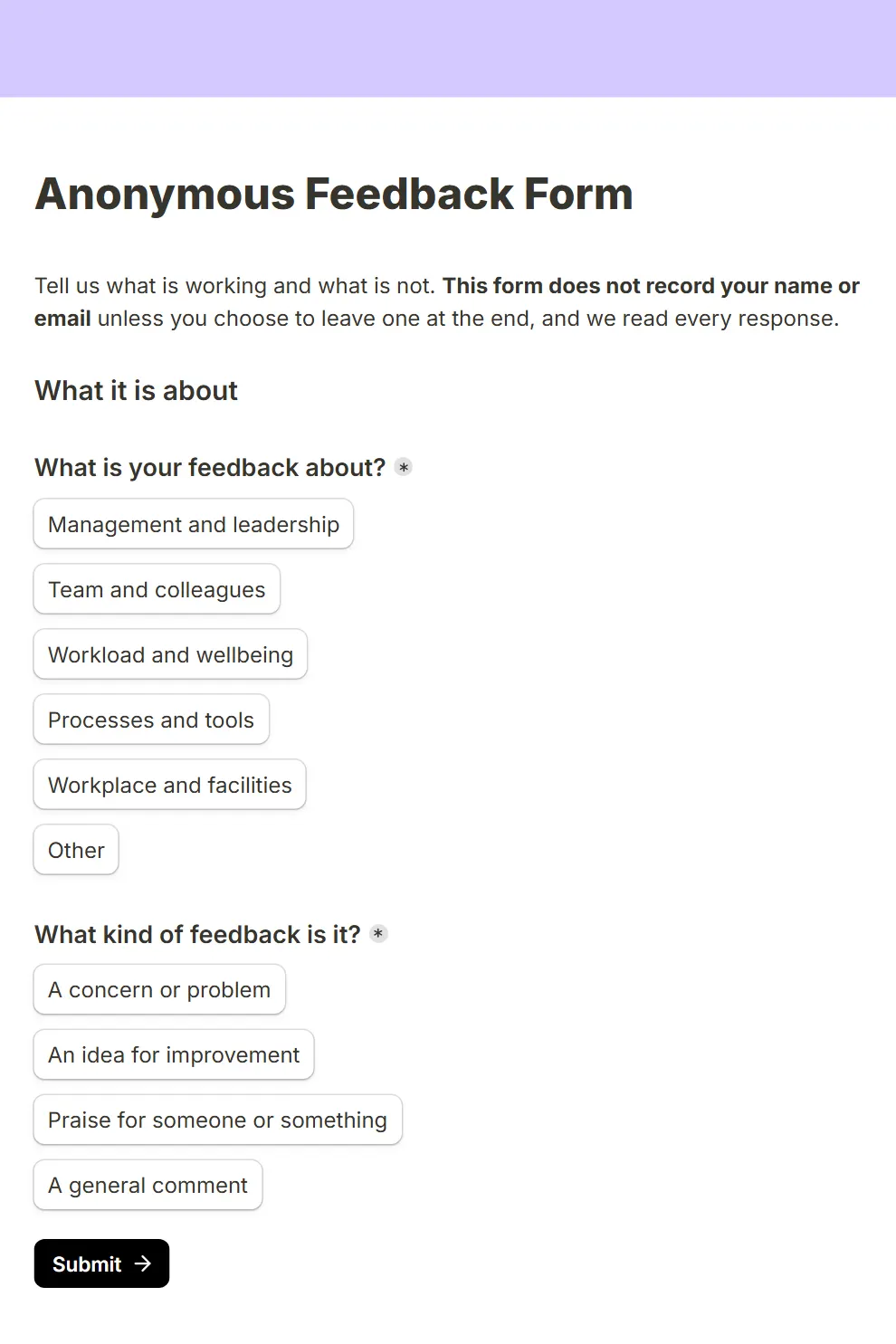
12 questions over 4 pages, 5 of them required. Some questions appear only after an answer that needs them.
- What is your feedback about?Single choice · required
- What kind of feedback is it?Single choice · required
- Tell us what you want to shareLong answer · required
- How serious is it?Single choice
- How long has this been going on?Dropdown
- What would you change?Long answer
- Who or what deserves the credit?Short answer
- How comfortable do you feel raising concerns openly here?Linear scale · required
- How would you rate your overall experience lately?Rating
- Anything else you want us to know?Long answer
- Would you like a reply?Single choice · required
- Where can we reach you?Email
Welcome to our Anonymous Feedback Form template page. This flexible, easy-to-use template can be deployed right away. The form is intended to help you gather valuable feedback from individuals in an anonymous manner, fostering a culture of openness and continuous improvement in your organization.
Anonymous Feedback Form Use Cases
An Anonymous Feedback Form is a significant tool in various domains such as education, business, or any community where gathering honest feedback is important. Here are its main uses:
1. Open and Honest Feedback - The promise of anonymity encourages participants to provide candid and truthful feedback.
2. Identifying Issues - It helps in identifying issues or problems that participants might be hesitant to share openly.
3. Improvement Suggestions - Participants can provide suggestions for improvement without any fear of reprisal.
4. Understanding Individual Experiences - In situations where individual experiences can vary greatly (for example, in a workplace or education setting), anonymous feedback can provide a more rounded and complete picture.
5. Building Trust - By acting on the feedback, you demonstrate to participants that you value their opinions, even when given anonymously. This can build trust over time.
Utilizing an Anonymous Feedback Form ensures the receipt of candid and honest feedback, ultimately leading to advantageous changes and improvements in your organization.
How to Use
1. Use the Template - Click on the "Use this template" button to make a copy of this Anonymous Feedback Form. You can then adjust it to fit your feedback collection requirements.
2. Customize the Form - Change, add, or remove fields as necessary. Consider focusing on areas or aspects where you seek the most honest feedback and ask relevant questions.
3. Share the Form - Once the form has been customized as per your needs, share it with the participant group. They can complete it with their feedback and suggestions, enabling you to gather anonymous insights.
4. Analyze the Responses - After receiving the completed forms, analyse the feedback. Use the anonymous insights to implement changes, resolve identified issues, and improve overall functioning.
Remember, this form is meant to collect feedback anonymously. Ensure you do not include any questions that might directly or indirectly reveal the identity of the respondent.
Frequently asked questions
How do I use the Anonymous Feedback Form template?
Simply click on the "Use this template" button to create a copy of this form that can be tailored to match your feedback collection neeeds.
Can I customize the Anonymous Feedback Form template?
Absolutely! You can add, remove, or revise questions as needed to match your specific anonymous feedback collection objectives.
How do I share the form with my participants?
Once it's been customized, share this form with your participants via email, a shared link, or directly through your organization's platform.
Does the form preserve anonymity of participants?
Yes, by its design, the form doesn't collect any personally identifiable information from participants. However, while customizing, ensure you don't add questions that might inadvertently reveal the participant's identity.
How should I use the anonymous feedback I receive?
The feedback collected should be used to identify areas of improvement or issues within your organization, make relevant changes, and enhance the participant experience. It fuels openness and continuous improvements.